1929-1939
- Stock Market Crash
- Didn’t realize the effect it would have
- No money to replenish what was borrowed
The Roaring 20’s
- The new concept of “credit”
- People were buying:
- Automobiles
- Appliances
- Clothes
- Fun times reigned
- Dancing
- Flappers
- Drinking
Why was this bad?
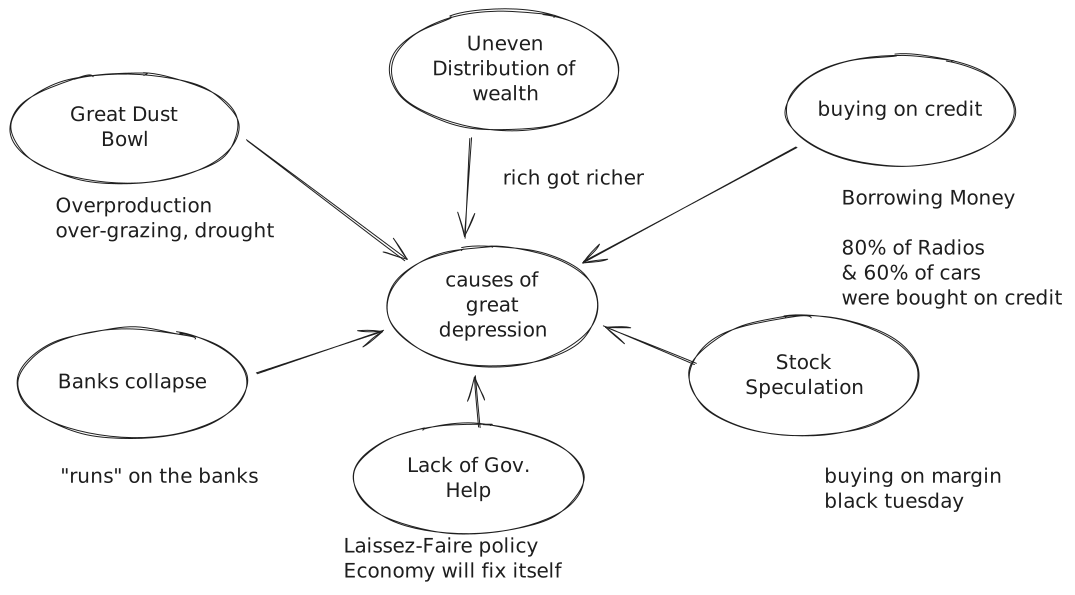
- Credit system
- People did not really have the money they were spending
- WWI
- The U.S. was a major credit loaner to other nations in need
- Many of these nations could not pay us back
EASY MONEY (CREDIT)
- INTEREST RATES ON LOANS WERE TOO LOW = TOO MUCH BORROWING INTEREST RATES ON SAVINGS WERE TOO LOW = Too much spending ( inflation ) excessive real estate construction = oversupply
Wealth is Distributed Unevenly
- Corporate profits rose 65% during the 20s.
- The rich became much richer during this time, while the workers’ conditions only improved slightly
1920s and 30s salaries
- Bus driver: no power steering or brakes
- 1300/hr
- Teacher
- $1227
- Waitress
- 0.20/hr
- Farmhand
- 0.07/hr
- First minimum wage under FDR?
- $0.25/hr
- Highest paid production workers in the 1920s - Ford Motor Company
- 0.48/hr.
- Farm Prices: Potatoes, Cotton, Pork?
- 0.01$ / pound potatoes
- 0.05$ / pound cotton
- $0.05 / pound pork
Uneven distribution of Wealth
- Many Poor and Very Few Rich!
- Workers earned so little tha tthey couldn’t buy the products they produced
- Wages were as little as 20 – 25 cents per hour!
- Even the best employer Ford Motor Company paid only 5.00$ / Day for a 6AM - 6PM shift
The Stock Market
- People bought stocks on _margins _(credit)
- If a stock is 100 now and the rest later when the stock rose
- Stocks fall
- Now the person has less than 100$ and no money to pay back
And then…
- Investors panicked about their money and tried to sell their stocks
- This leads to a huge decline in stocks
- Stocks were worthless now
- People who bought on “margins” now could not pay
- Investors were average people that are now broke
What about the people?
- Farmers were already feeling the effects
- Prices of crops went down
- Many farms foreclosed
- People could not afford luxuries
- Factories shut dow
- Businesses went out
- Banks could not pay out money
- People could not pay their taxes
- Schools shut down due to lack of funds
- Many families became homeless and had to live in shanties
AGRICULTURAL OVERPRODUCTION
- INCREASED TECHNOLOGY
- GOOD GROWING CONDITIONS
- SUPPLY GREATER THAN DEMAND
The Great Dust Bowl
- Over use & Over grazing
- No crop rotation
- No soil conservation
- No wind breaks
- Loss of natural grasses and animals
- Climatic change – the drought of the ‘30s
OVERSPECULATION
- “ GET RICH QUICK SYNDROME ”
- MARGIN BUYING
- LACK OF GOVT REGULATION
- PANIC SELLING
- ‘29 MARKET CRASH
Run on Banks
- The crisis in confidence frightened depositors who feared for their money.
- Millions tried to withdraw their money because they feared the banks losing it
- 1929 - 641 banks failed
- 1930- 1350 banks failed
- 1931- 1700 banks failed
President Hoover
- Conservative President: Herbert Hoover
- Philosophy : Rugged Individualism
- What He Did: Nothing
- People looking for help and no solutions were coming
Laissez-Faire Economic Policy
- Prior to the Great Depression the US. Government ignored the business cycles of the US economy.
- The Government believed that the American Economy could fix itself
THE BUSINESS CYCLE_ _
- BOOM/PROSPERITY/PEAK
- HIGH DEMOAND = DESIRE FOR MORE PROFITS = GREATER INVESTMENT = MORE PRODUCTION = HIGHER EMPLOYMENT = MORE DEMAND = HIGHER PRICES ( INFLATION )
POOR MONETARY POLICY
- FED RESERVE INCREASED INTEREST RATES WHICH MADE MONEY/BORROWING MORE EXPENSIVE & SAVING MORE ATTRACTIVE
- INSTEAD OF LOWERING INTEREST RATES TO GIVE THE ECONOMY A “JUMP START”
_POOR FISCAL POLICY _
- HOOVER ADMIN & CONGRESS CUT SPENDING AND RAISED TAXES TO BALANCE THE BUDGET INSTEAD OF INCREASING SPENDING & CUTTING TAXES TO JUMPSTART THE ECONOMY
- EX. TEMPORARILY DEFICIT SPENDING
_HIGH TARIFFS _
- WE TAXED FOREIGN IMPORTS TO PROTECT OUR PRODUCTS UNDER HOOVER THE HAWLEY SMOOT TARIFF IS PASSED - THE HIGHEST PROTECTIVE TARIFF IN US HISTORY!!! FOREIGN NATIONS TAXED IMPORTS FROM THE US IN RETALIATION
- HIGHER PRICES FED UNDERCONSUMPTION
- NATIONS STOPPED PAYING WWI DEBTS TO THE U.S.