Labor Unions
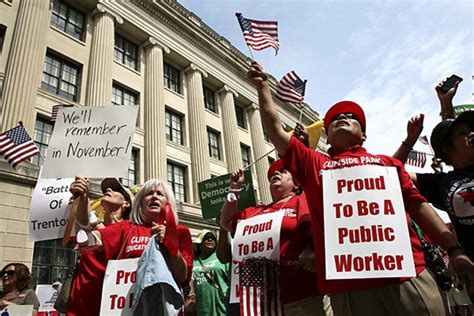
- A group of workers who join together to improve the terms and conditions under which employees work.
- Increased bargaining power.
- The more people you have in regards to protests or going on strike, the better it increases your bargaining power.
- Labor Unions serve three purposes
- Negotiating labor contracts
- Insuring That labor contracts are carried out
- Organizing workers into a single bargaining Unit.
3 Types of Labor Unions
-
A Craft Union, AKA Trade Union.
- These Unions include skilled workers that work in specific occupations
- For example: Plumbers, Carpenters, Machinists,
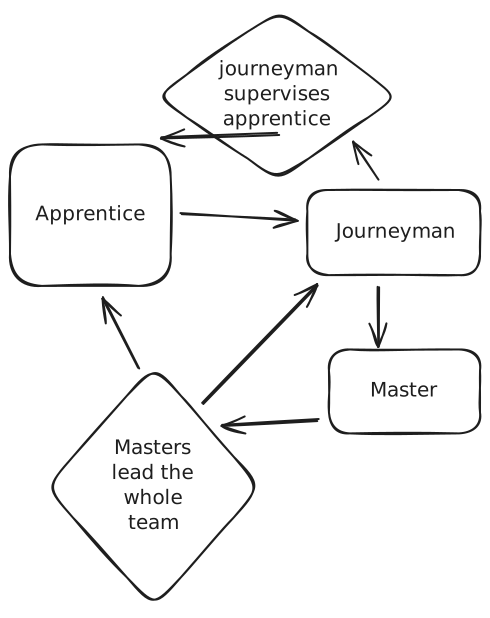
- Within the trade union there are 3 levels of membership:
- Apprentice ( they are just starting the job, fresh ) ( Work under direct supervision of more experienced union members )
- Journeyman ( They have taken courses in the job area, passed the state exam, and are licensed. ) ( e.g. licensed carpenter, or licensed barber.)
- Master ( They have been in the field, gone through apprentice-hood and journeyman-ship, they are a team leader for other employees in the same job field )
- Within the trade union there are 3 levels of membership:
-
Industrial Union
- Include a wide range of workers across an industry even though workers may hold a variety of different jobs
- Have to go through a probationary period and become permanently employed ( e.g. United Auto Workers, United Mine Workers of America )
-
Professional Union
- Common in the public sector ( E.g. Nurses, Teachers, Firefighters, Athletes, Actors, Rioters )
3 Levels
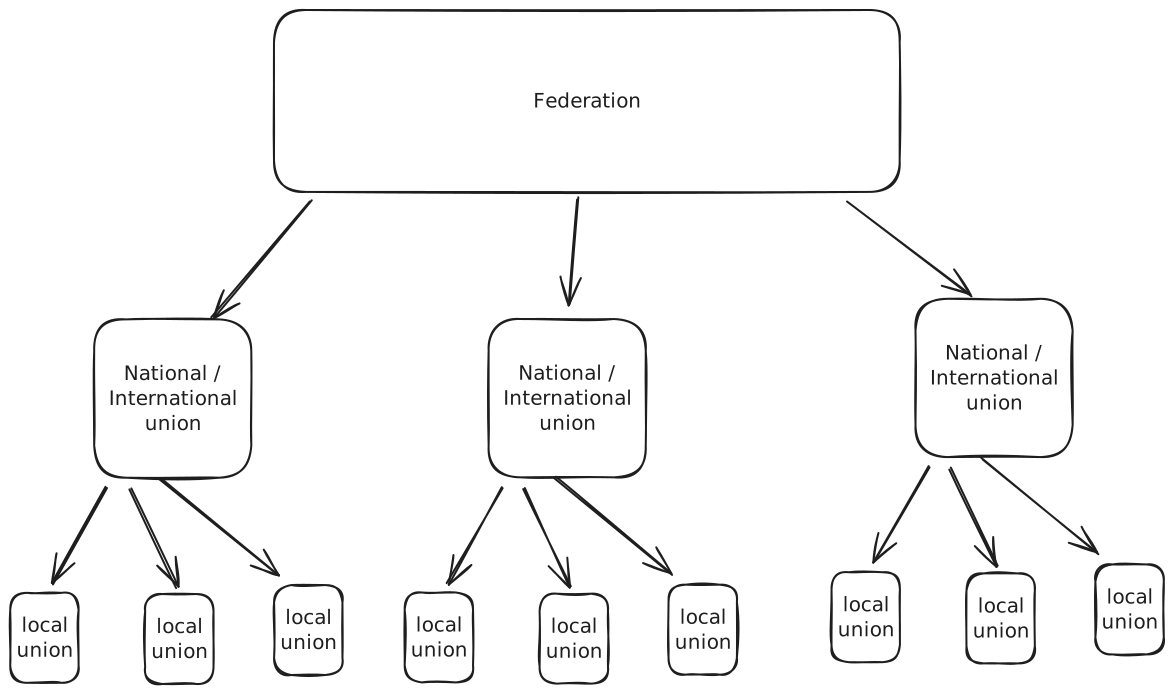
- Local Union
- A chapter of a national / International union that represents workers at a specific company or a specific geographical area
- Are responsible for electing their own officers, Scheduling their own meetings, and participating or engaging in community events
- National / International unions
- Provide leadership for Local Unions and assist them in negotiating labor contracts.
- Federations
- Consist of several National / International Unions of different kinds that join together to further their common purposes ( e.g. political agendas and public relations )
Independent unions
- Unions that do not belong to anything or anybody
- Control their own local unions
- Assist in contract negotiations for all members
Labor Unions vs Company Management
- Why a labor union and a company may bump heads
-
wages
- Labor unions are FOR THE PEOPLE - the company is for MONEY and THEMSELVES.
- Companies want a tight budget and to rack up cash
- labor unions want people to be doing well
- labor unions will fight for the people to have more money while companies will fight to pay them less
-
Benefits
- Companies hate spending money unnecessarily
- benefits cost money
- unions want employees to be safe and also live comfortably
- benefits let them live comfortably
- companies are likely to fight to save that money
- Examples:
- Dental
- Health Insurance
- Healthcare
- Life Insurance
- Sick days
- PTO
- Retirement planning
-
Job Security and seniority
- NC is an at will state - a job can fire you at will without any explanation.
- Labor unions can try to improve job security
- job security is often a nuisance for companies it costs money to employ people with lots of experience
- labor unions can make sure new hires are not being paid a significant amount more than their superiors, and ensure pay hikes for those superiors when relevant
-
Working Conditions
- Labor unions can work to make sure that there will be a safe work environment
- Safe work environments cost money
- Companies like to keep their money
- Labor unions can use the bargaining power they have ( a significant amount of employees enrolled in the union ) to make sure that the company has good safety policies
-
Hours
- Labor Unions attempt to make your hours sane and not have your job consume your entire life, as that’s not great for mental health, and would like you to be properly compensated for any overtime.
- Companies would love to have you work enough hours that they don’t have to hire another person and have you completely dedicated to your job. Companies would also love to not properly pay you for overtime
-
Union Security
- They address whether or not all the employees at a company will become union members
- Union Shop ( Employees are required to join Union after probationary period )
- Right to work laws ( freedom to work without joining a Union )
- Agency shop ( Employees are required to pay Union dues, but do not have to join union )
- Open Shop ( Employee does not have to join the Union or pay dues )
- Union Shop ( Employees are required to join Union after probationary period )
Collective bargaining
- When a union tries to make a deal with a company for better working conditions
- Both sides have to prepare beforehand with research and reports relevant to the issue
- when Both sides are ready they meet and negotiate
- Once they reach an agreement that they are both ok with, that is called a tentative agreement
- It is not official until both sides have approved it. Union members need to vote and the board needs to approve it for the company.
Pressures Strategies
Strikes
- Strikes are when a union’s workers all refuse to come to work. There are a number of different types.
Wildcat strikes
- Local union stops working without the approval of the National organization
Sit-down or sit-in strike
- Employees keep coming to work, but don’t do any actual work, they just sit around.
Sympathetic strikes
- When one union’s workers stop working to support another union e.g. our apple workers stopping working to support the vietnamese workers ( but if the vietnamese workers had a union )
Sick out strike
- Union members all call in sick to mess up company production
Picketing
- putting union members near a business during a strike discourage non striking employees and customers from going to the business
Boycotts
- When union members dont buy a business’s goods and services and encourage other people not to either
Corporate Campaign
- When union members attempt to disrupt shareholder meetings or buy up stock to increase their control of the company
Management also has their own pressure strategies:
Lockouts:
- Just dont let the union workers into work
Injuctions:
- A court order which stops union members from picketing or damaging the company in any way
Shifts in production:
They might move production somewhere else so that they dont have to worry about the union in some area
rest of class: start working on the business presentation project each week you are knocking pieces out Here is what we are doing : i dont care what you use it will be lengthy
Name of business
- What is your business ? What does it sell? what are its target customers? etc ( include leadership management style ( 2nd slide ) ( it can have more than one leadership style ) )
- 5 effective human relations the business focuses on
- Labor Union vs Company Management What the union wanted what the company wanted what were the terms